
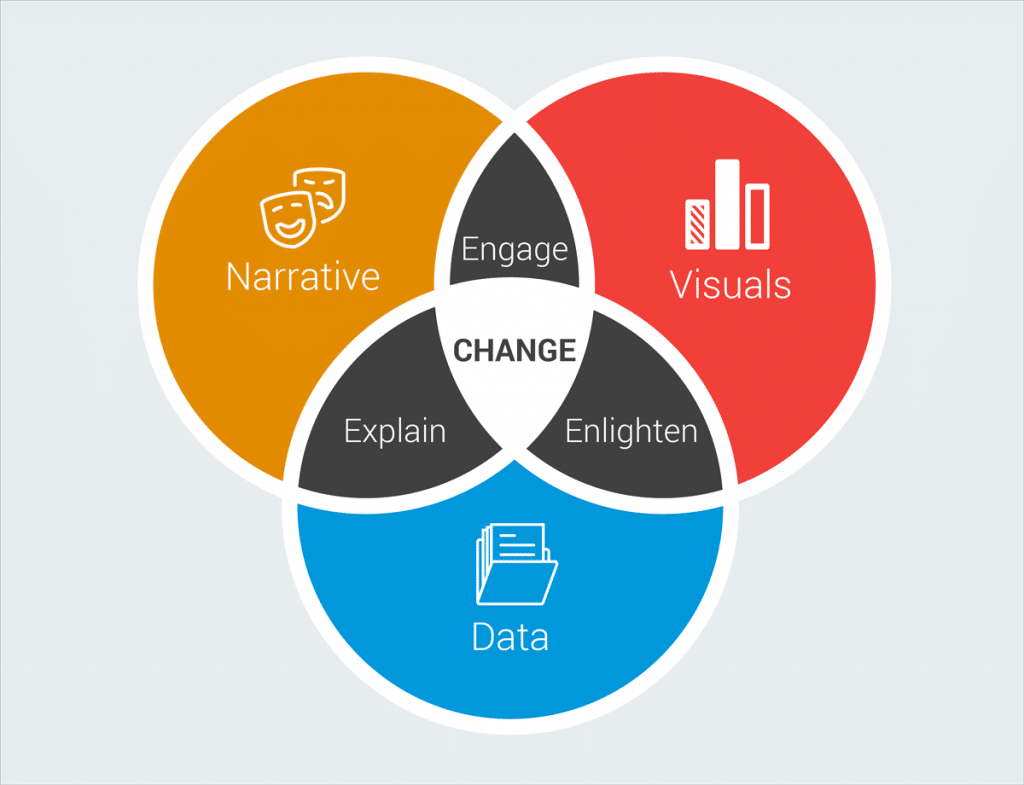
Data storytelling for businesses is an impactful strategy that merges narrative techniques with data visualization to convey insights clearly and effectively. By leveraging analytics tools, organizations can turn intricate data sets into compelling stories that resonate with their audience and stakeholders. This approach enhances business intelligence and encourages data-driven decision-making, allowing for a better grasp of trends and patterns through straightforward charts and infographics. Ultimately, data storytelling enables businesses to present their data insights in an engaging and informative manner, cultivating a strong data culture and improving stakeholder engagement. This method not only facilitates communication but also strengthens the overall effectiveness of information design within the organization.
When it comes to translating powerful data insights into a format that people can dig into, there’s a big difference between visualization and storytelling.
Data storytelling for businesses is primarily rooted in data visualization, transforming complex data sets into clear and engaging visuals that facilitate comprehension. By utilizing various data visualization techniques, organizations can effectively communicate insights, allowing stakeholders to quickly understand critical information and make informed decisions. This approach significantly enhances business intelligence, empowering teams to leverage advanced analytics tools to uncover trends and patterns within the data, thus refining the decision-making process. Cultivating a robust data culture through effective data storytelling not only boosts stakeholder engagement but also promotes data-driven decision-making throughout the organization, ultimately resulting in better business outcomes. Embracing narrative techniques and utilizing data storytelling frameworks can further enrich the storytelling process, making it easier for data analysts to present data insights through infographics, charts, and dashboards.
Integrating narrative techniques into data visualization significantly improves audience engagement and promotes a deeper comprehension of the information presented. By combining striking visuals with storytelling elements, businesses can create a more impactful experience that connects with their audience, enhancing stakeholder engagement and motivating action based on the insights shared. In today’s data-driven landscape, mastering data storytelling for businesses through effective data visualization techniques is crucial for organizations aiming to maximize their data assets and enhance data-driven decision-making. Cultivating a robust data culture empowers data analysts to convey insights more effectively, resulting in valuable business intelligence outcomes. Additionally, utilizing analytics tools and storytelling frameworks can further refine the approach to data storytelling, making it an essential skill for modern businesses.
Mastering data storytelling for businesses significantly improves communication and fosters a robust data culture that emphasizes data-driven decision-making. This method transforms valuable insights from complex data sets into actionable business strategies. In today’s complex data environment, the ability to craft compelling narratives using effective data visualization techniques is crucial for achieving strategic objectives and maintaining a competitive advantage. By utilizing advanced analytics tools, businesses can enhance stakeholder engagement and facilitate informed decision-making that aligns with their goals, resulting in a deeper comprehension of data trends and patterns. Incorporating narrative techniques into data storytelling not only clarifies insights but also enhances overall business intelligence outcomes, making it an essential practice for data analysts and organizations striving for success.part Data storytelling for businesses is a vital strategy that combines narrative techniques with data visualization to convey insights effectively. Many people mistakenly think that merely displaying data through charts and graphs qualifies as storytelling. In truth, effective data storytelling transcends basic visualization; it requires creating a compelling narrative that connects with the audience and emphasizes crucial data insights. By leveraging advanced data visualization methods and utilizing analytics tools, businesses can enhance stakeholder engagement and foster a data culture that supports informed decision-making based on emerging trends and patterns. This approach not only improves communication practices but also enables data analysts to convert complex data sets into engaging narratives that inspire action and drive positive business outcomes.
This method not only simplifies complex information but also enhances audience engagement, allowing stakeholders to understand data more intuitively and make informed, data-driven decisions. By merging effective narrative techniques with advanced analytics tools, businesses can significantly improve their data visualization strategies. This integration supports a robust data culture that encourages stakeholder engagement and strengthens business intelligence. The fusion of storytelling and data insights is crucial for optimizing data storytelling for businesses, ensuring that essential insights are conveyed clearly and that trends and patterns are easily recognizable. Emphasizing visual storytelling elements, such as infographics and dashboards, can further improve the data communication process, ultimately leading to better business outcomes.TableauUtilizing analytics tools like Power BI greatly improves business intelligence efforts, leading to more successful strategic outcomes. Additionally, data storytelling for businesses plays a crucial role in converting raw data into meaningful insights, which nurtures a data culture that encourages data-driven decision-making and overall success. This approach not only boosts stakeholder engagement but also utilizes effective data visualization techniques, such as charts and infographics, to simplify complex information, making it more impactful for decision-makers. By emphasizing trends and patterns, organizations can ensure their data insights connect with their audience, enabling informed choices that enhance business performance. Implementing narrative techniques and established data storytelling frameworks can further improve the clarity and usability of these insights, making them more accessible for data analysts and stakeholders.
Focusing on the narrative aspect can greatly enhance data storytelling for businesses, allowing data to resonate more deeply with the audience. This approach not only boosts the clarity of the message but also improves the audience’s understanding of the insights presented. Utilizing data visualization techniques in conjunction with powerful analytics tools can foster greater stakeholder engagement and support data-driven decision-making. Building a strong data culture enables teams to share insights more effectively, leading to better business intelligence outcomes. By emphasizing trends and patterns within complex data sets, organizations can enrich the storytelling experience, making it more relevant and actionable for decision-makers. Furthermore, incorporating narrative techniques creates engaging stories that improve communication and audience involvement, ultimately driving better business outcomes.story Data storytelling for businesses highlights the essential importance of data visualization techniques in presenting insights in a clear and engaging manner. By integrating narrative techniques with advanced analytics tools, organizations can convert complex data sets into captivating stories that connect with their audience. This method not only improves comprehension but also supports data-driven decision-making, enabling stakeholders to readily access and utilize vital data insights. Fostering a strong data culture through this strategy promotes greater stakeholder engagement and enhances overall business intelligence. Ultimately, effective data storytelling empowers businesses to uncover trends and patterns, maximizing the impact of their data assets.
Mastering data storytelling for businesses significantly enhances business intelligence efforts by improving stakeholder engagement and creating a stronger connection to shared information. By employing various data visualization techniques, including infographics, charts, and dashboards, organizations can effectively highlight trends and patterns that might otherwise go unnoticed. This leads to improved business outcomes and nurtures a data culture focused on data-driven decision-making. Key analytics tools like Tableau and Power BI are vital in this process, greatly enhancing the effectiveness of data storytelling and enabling data analysts to present valuable insights with increased clarity and impact. Additionally, integrating narrative techniques can further enhance these initiatives, making complex data more accessible and engaging for all audiences involved.
They are not.
Interpreting charts and graphs provides insights that are clearer and more accessible. This visual representation of data simplifies complex information, making it easier to understand the subject matter. Successful data storytelling for businesses relies on effective data visualization techniques that engage the audience while clearly communicating vital information. By integrating narrative techniques with sophisticated analytics tools, organizations can transform raw data into compelling stories that facilitate data-driven decision-making and improve stakeholder engagement. Cultivating a strong data culture allows businesses to recognize trends and patterns, leading to more informed and impactful business intelligence results. Emphasizing the importance of infographics and dashboards further enhances communication and information design, ultimately driving better outcomes.
This approach not only produces essential business intelligence but also strengthens relationships with stakeholders, ensuring that insights remain relevant and translate into actionable outcomes. A well-crafted narrative can reveal trends and patterns that might otherwise be overlooked, empowering businesses to make informed, data-driven decisions. Mastering data storytelling for businesses is crucial for organizations seeking to leverage data effectively and enhance stakeholder engagement, ultimately providing a competitive edge. By integrating data visualization techniques and utilizing analytics tools, companies can cultivate a robust data culture that improves their decision-making processes and leads to superior business results.
Is simply presenting data enough to motivate action? Does it effectively engage your audience, or does it merely convey information without encouraging deeper thought or response? To fully harness the power of data storytelling for businesses, it is crucial to go beyond just displaying numbers. The goal is to captivate your audience and inspire them to take significant action. By utilizing narrative techniques, raw data can be transformed into engaging stories that resonate deeply with stakeholders. This method not only enhances stakeholder engagement but also promotes data-driven decision-making, cultivating a robust data culture within your organization. By applying effective data visualization methods and leveraging advanced analytics tools, data analysts can uncover trends and patterns that provide valuable insights, ultimately strengthening business intelligence and driving better business outcomes.
Leveraging data storytelling for businesses through impactful data visualization techniques, such as charts and infographics, greatly enhances audience engagement and uncovers vital insights that facilitate informed, data-driven decision-making. The objective goes beyond simply displaying data; it aims to inspire your audience to connect with the information and take meaningful actions based on the insights shared. By cultivating a robust data culture, you can improve stakeholder engagement and enable your team to utilize analytics tools effectively, leading to enhanced business intelligence. Incorporating narrative techniques into your presentations can transform intricate data sets into captivating stories that resonate with your audience, ultimately driving improved business outcomes.
Data storytelling for businesses is about converting complex information into easily digestible formats. A crucial aspect of this method is data visualization, which transforms large data sets into visual representations like charts and graphs, enabling stakeholders to make informed decisions. However, simply incorporating visual elements is insufficient. To maximize the impact of data, it is essential to utilize narrative techniques that enhance audience engagement and effectively communicate actionable insights derived from the data. By adopting these strategies, businesses can cultivate a robust data culture that promotes data-driven decision-making and enhances overall business intelligence. This approach not only helps in identifying trends and patterns but also empowers data analysts to convey their findings more compellingly, ultimately leading to improved business outcomes.
Utilizing a variety of data visualization techniques, such as charts and graphs, allows businesses to communicate their insights more effectively. When these visualizations are integrated with advanced analytics tools like Tableau and Power BI, they create a cohesive narrative that aligns with strategic goals and promotes data-driven decision-making. By combining data visualization with compelling storytelling elements, organizations can significantly enhance their data experience. This approach enables them to confidently navigate complex data sets, cultivate a strong data culture, boost stakeholder engagement, and ultimately gain a competitive edge in their industry. Highlighting the role of narrative techniques in data storytelling for businesses can facilitate clearer communication and lead to more impactful case studies that resonate with audiences.
To successfully utilize data visualization as a storytelling tool, it is crucial to captivate your audience in an informative and engaging way. Data storytelling for businesses transforms raw data into visually appealing charts and infographics that highlight essential insights. This method not only simplifies complex data sets but also strengthens the connection between the audience and the information, promoting a strong data culture that supports data-driven decision-making and boosts stakeholder engagement. By employing various data visualization techniques, businesses can ensure their analytics tools convey valuable insights effectively, ultimately enhancing their overall business intelligence and enabling a deeper understanding of data trends and patterns. The strategic use of narrative techniques within data storytelling frameworks can significantly improve engagement and contribute to better business outcomes.
By combining diverse narrative techniques with advanced data visualization methods, businesses can leverage analytics tools to create engaging stories that resonate with their stakeholders. This approach enhances understanding and supports data-driven decision-making, allowing stakeholders to grasp complex data insights more effectively. The main goal is to develop a persuasive narrative that not only informs but also motivates action based on the presented data, thereby nurturing a robust data culture within the organization. Emphasizing effective data storytelling for businesses greatly enhances stakeholder engagement and plays a crucial role in achieving improved business outcomes.motivates action. Effective communication is essential for motivating action and fostering participation in various initiatives, whether they relate to individual projects, strategic decisions, or larger movements. In the context of data storytelling for businesses, clear communication is crucial for conveying data insights that support data-driven decision-making. By utilizing data visualization techniques, such as infographics and dashboards, organizations can improve stakeholder engagement and develop a strong data culture. This approach not only emphasizes important trends and patterns but also allows data analysts to create compelling narratives that resonate with their audience. Consequently, the effectiveness of their analytics tools and storytelling frameworks is greatly enhanced, making data storytelling a vital aspect of contemporary business intelligence.
Clear communication is vital for building connections and fostering a shared sense of purpose, which drives active participation in business environments. In these contexts, collaboration and alignment on strategic objectives are essential for achieving success and encouraging innovation. Highlighting the significance of stakeholder engagement can greatly improve business intelligence, allowing teams to leverage data storytelling for businesses more effectively. By incorporating data visualization techniques and advanced analytics tools, organizations can develop a robust data culture that supports data-driven decision-making. This approach delivers valuable insights through compelling narratives, infographics, and dashboards, effectively showcasing key trends and patterns that influence business results.
Organizations can significantly improve their data storytelling for businesses by incorporating effective data visualization techniques and utilizing advanced analytics tools. This approach allows them to create engaging narratives that uncover valuable insights from complex data sets. By enhancing their storytelling methods, they not only engage their audience more effectively but also refine their communication strategies, fostering a robust data culture that emphasizes data-driven decision-making. Consequently, stakeholders are more inclined to participate in discussions, which ultimately enhances business intelligence and promotes increased stakeholder engagement. Focusing on narrative techniques and employing data storytelling frameworks can further enrich this process, resulting in more impactful case studies and a better understanding of data trends and patterns.
Data visualization plays a crucial role in creating compelling narratives, particularly in the realm of data storytelling for businesses. By utilizing effective data visualization methods, you can convert intricate data insights into engaging stories that connect with your audience. This strategy not only enhances understanding but also boosts stakeholder engagement, making your communication more powerful and aiding in data-driven decision-making. By showcasing trends and patterns through charts and infographics, you can foster a strong data culture that promotes informed choices and elevates the importance of data analysts within your organization. Adopting narrative techniques and leveraging advanced analytics tools can further enhance your data storytelling initiatives, ensuring your business stays competitive in an ever-changing, data-driven environment.
Effectively using a variety of charts and graphs highlights important trends and insights, allowing your audience to quickly understand essential information. Moreover, integrating narrative techniques with business intelligence and analytics tools enables you to present data in a way that emphasizes key insights, thus promoting data-driven decision-making. By combining visual storytelling with compelling narratives, you create a unified story that informs and inspires action among stakeholders in your organization, helping to cultivate a robust data culture. This approach not only boosts stakeholder engagement but also reinforces the importance of data storytelling for businesses in developing informed strategies and achieving favorable business outcomes.
Craft a story using data analysis
Transforming data into a compelling narrative is akin to telling a story through words, visuals, or videos. To effectively engage your audience, it’s essential to provide context that underscores the significance of the data, clearly outlining the challenges it addresses and highlighting any urgent issues. This method not only sharpens your core message but also enhances the effectiveness of data storytelling for businesses. By employing data visualization techniques and utilizing advanced analytics tools, you can significantly boost stakeholder engagement and facilitate data-driven decision-making. Ultimately, this strategy cultivates a robust data culture and enriches the insights derived from your data, leading to a clearer understanding of trends and patterns. Engaging narratives crafted with effective storytelling frameworks can greatly improve communication strategies and strengthen your connection with the audience, making your data storytelling initiatives more impactful and aligned with your business objectives.
Leveraging effective data visualization techniques, such as charts and graphs, enables you to present complex data insights in a manner that is both understandable and engaging for your audience. Additionally, integrating narrative techniques with analytics tools can greatly enhance your business intelligence strategy, ensuring that your message resonates well with stakeholders. A well-crafted narrative surrounding your data not only educates but also captivates, fostering a stronger connection with your audience and promoting a data culture that supports data-driven decision-making. This method of data storytelling for businesses boosts stakeholder engagement and aids in uncovering trends and patterns that lead to informed business outcomes.
Effective data storytelling for businesses combines personal insights and relatable anecdotes with powerful data visualization techniques. This strategy transforms static charts and graphs into engaging, dynamic elements of the overall narrative. By integrating storytelling elements into data visualization, businesses can present insights that simplify complex information, making it more accessible and memorable for their audience. This approach not only enhances stakeholder engagement but also promotes data-driven decision-making, ultimately strengthening the organization’s data culture. Utilizing analytics tools and real-time case studies further enriches this process, allowing data analysts to uncover trends and patterns that resonate with their audience and drive impactful business outcomes. Adopting narrative techniques can significantly improve the effectiveness of data storytelling, ensuring that the message remains clear and compelling.
This method not only increases audience engagement but also enriches the overall narrative, significantly enhancing the effectiveness of business intelligence and analytics tools. When organizations focus on these strategies, they greatly improve their capacity to convey essential information, fostering a deeper understanding and connection with stakeholders. Ultimately, utilizing data storytelling for businesses, combined with effective data visualization techniques, enables companies to communicate their messages more clearly. This leads to improved data-driven decision-making and valuable insights that contribute to a strong data culture. By leveraging infographics and dashboards, businesses can identify trends and patterns that further boost stakeholder engagement and informed decision-making, making their data communication more impactful.
Utilizing innovative data storytelling for businesses, which encompasses techniques like comparisons and contrasts, can significantly clarify your company’s position and effectively convey its mission while establishing a personal connection with your audience. This method not only boosts stakeholder engagement but also converts raw data into actionable insights that support data-driven decision-making. By integrating data visualization techniques and leveraging advanced analytics tools, businesses can enhance their storytelling capabilities, cultivating a strong data culture that resonates with all stakeholders. This approach is essential for uncovering trends and patterns, ultimately leading to improved business intelligence and more favorable business outcomes. Additionally, employing data storytelling frameworks and creating engaging infographics can further elevate your communication strategy.
Incorporating narrative techniques into your data presentations significantly enhances the effectiveness of data storytelling for businesses. This method enables your audience to better understand analytics and appreciate their relevance in practical situations. Furthermore, using data visualization methods, such as infographics, charts, and dashboards, enhances your narrative by clarifying complex data sets and making them visually appealing. This combination of storytelling and effective data visualization not only supports improved data-driven decision-making but also deepens the understanding of business intelligence within your organization. As a result, it fosters a robust data culture that encourages stakeholder engagement and refines overall data communication strategies. By leveraging these storytelling elements, businesses can effectively convey insights and achieve positive business outcomes.
In the business environment, many people think that presentations must be entirely impersonal and focused only on business topics. This perspective can limit the impact of your message in data storytelling for businesses. By incorporating personal elements, you can significantly boost stakeholder engagement and clarify your data insights. This approach not only deepens the connection with your audience but also supports more effective data-driven decision-making, enhancing your data visualization techniques. Adopting this method can foster a dynamic data culture within your organization, enabling trends and patterns to resonate more profoundly with decision-makers and improving overall business outcomes.
Using narrative techniques allows you to craft a compelling story that resonates with your audience, turning complex data sets into relatable and easily understandable insights. This customized approach not only improves retention but also enhances data visualization methods, such as charts and infographics, by providing essential context that underscores the importance of the data. Achieving the right balance between personal narratives and business intelligence can transform your presentations into memorable experiences that truly engage your audience. By adopting a more personal touch in your data storytelling for businesses, you can enhance communication and build stronger relationships with stakeholders, ultimately promoting more effective data-driven decision-making and boosting stakeholder engagement. Emphasizing these storytelling elements fosters a robust data culture that values insights, trends, and patterns, leading to improved business outcomes.
Transforming raw data into a compelling narrative requires the integration of key storytelling elements that engage the audience while delivering meaningful insights. This process starts with effective data visualization methods, including charts and infographics, which clarify and simplify intricate data sets. The real strength of data storytelling for businesses is realized when these visuals are woven into a narrative that resonates with the audience. By employing narrative techniques, organizations can emphasize important trends and patterns, making complex data more understandable and enhancing stakeholder engagement. This approach fosters a robust data culture that encourages data-driven decision-making and empowers data analysts to convey insights more effectively, ultimately leading to improved business outcomes.
This approach greatly enhances stakeholder engagement and provides decision-makers with actionable insights that align with their strategic goals. By leveraging advanced analytics tools, businesses can delve deeper into their data, uncovering hidden narratives that can influence stakeholders. The combination of engaging visuals and a coherent narrative transforms data into a vital resource for improving business intelligence and encouraging data-driven decision-making. Adopting effective data storytelling for businesses simplifies complex information and nurtures a robust data culture that facilitates informed choices. This method empowers data analysts to identify trends and patterns, ultimately leading to better business outcomes. Additionally, utilizing data visualization techniques, such as charts and infographics, can further enrich the storytelling process, making insights more accessible and impactful.is, Connecting with your audience on a personal level is essential when sharing data insights. Effective data storytelling for businesses goes beyond merely presenting information; it creates a meaningful connection through relatable narratives. By employing data visualization techniques, you can boost stakeholder engagement and simplify complex analytics, making the information more understandable. This strategy fosters data-driven decision-making, enabling your audience to better comprehend key business intelligence concepts. Ultimately, nurturing a robust data culture within your organization can greatly enhance how data analysts convey insights, resulting in more impactful presentations that highlight trends and patterns. By incorporating narrative techniques and utilizing analytics tools, you can further elevate your data storytelling initiatives.
Effectively engaging your audience transforms raw data into compelling narratives that resonate on a deeper level. This approach not only enhances understanding but also evokes a stronger emotional response, making your insights more impactful. Utilizing data storytelling for businesses enables you to merge data visualization techniques with storytelling elements, crafting a memorable experience that boosts business intelligence and supports data-driven decision-making. By fostering a strong data culture, you can enhance stakeholder engagement and ensure that your analytics tools deliver valuable insights, aiding in the identification of trends and patterns that inform strategic decisions. This method ultimately results in improved business outcomes and a more knowledgeable organization.
Effectively presenting data insights through thoughtfully designed charts and graphs simplifies complex information and enhances data-driven decision-making. By focusing on stakeholder engagement, you can turn your data into a powerful storytelling tool that fosters meaningful discussions and drives action within your organization. Building a strong data culture ensures that your initiatives align with strategic goals and bolster your competitive advantage in the marketplace. Emphasizing data storytelling for businesses not only improves comprehension but also utilizes data visualization techniques to reveal trends and patterns that contribute to successful business outcomes. This strategy enhances communication and empowers data analysts to leverage analytics tools and narrative techniques that connect with a wide range of audiences.
Unlimited subscription £49.99
Now only £35
For Limited Period
READY TO DIVE DEEPER?
One subscription, unlimited UK Company search and downloads.
Sign up to a simple membership plan that gives you unlimited access to predefined dashboards allowing for different analysis and views into critical sales and business intelligence.
Related Posts

February 19, 2024
Check Company Ownership insights with DataEco With recentnews of tighter legislation being passed through the houseMany individuals frequently seek information about company ownership [...]
February 19, 2024

September 6, 2021
Analyze a company's competitors using DataEco. So how do you rank? Over the past year, numerous companies have prioritized survival, frequently neglecting the significant external [...]
September 6, 2021

May 19, 2021
Companies House Check with DataEco So what is the importance of Companies House? Companies House serves as the official [...]
May 19, 2021

December 8, 2020
Ltd Company Check with DataEco So why do we have Limited companies and what is the difference? A ‘Ltd’ or ‘Limited’ company is [...]
December 8, 2020

November 30, 2020
To check a UK company name, it's essential to confirm that the name you are considering complies with the standards for UK business [...]
November 30, 2020

November 18, 2020
UK Company Search Performing a UK Company Search depends significantly on the tools available and how well the data is organized for easy [...]
November 18, 2020

November 16, 2020
B2B Data Providers UK B2B data providers in the UK have existed in various forms for many years. In the past, marketing teams [...]
November 16, 2020

November 12, 2020
UK Economy Bounces Back Recent observations show that the UK economy is progressing significantly towards recovery. This encouraging trend highlights a resurgence across [...]
November 12, 2020

October 29, 2020
UK Companies and Industries at Risk This year has presented significant challenges, leading to uncertainty regarding which UK companies are at risk of [...]
October 29, 2020
May 14, 2020
Segmentation of UK businesses An online search reveals a wealth of articles on marketing segmentation, yet there is a significant gap in information [...]
May 14, 2020