
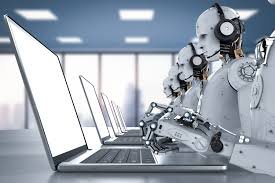
So what about Machine and Man?
When we think about AI, we often envision the robot armies depicted in Hollywood films. However, the reality is that the manufacturing sector has been gradually adopting more automated processes powered by AI technologies for quite some time. It’s intriguing to observe how common household items are being enhanced with AI capabilities. For example, vacuum cleaners and washing machines now employ sophisticated algorithms to improve their efficiency and performance. As this digital transformation progresses, it becomes clear that the workforce involved in developing these innovations will increasingly focus on AI, underscoring the profound effects of AI changing the workforce. This shift also raises important discussions about automation, the potential for job displacement, and the critical need for job reskilling in an ever-evolving job market. Prioritizing workforce development and adapting to emerging employment trends in AI and the future of work will be essential for thriving in this new environment.
The cost errors in manufacturing has now started to be eliminated by the use ofMachine Learning AlgorithmsThe quality assurance process for visual inspection has experienced a significant transformation. Instead of relying solely on human expertise to identify defects, the focus has shifted to leveraging the speed and precision of machines. Recent innovations in digital image recognition technology enable rapid learning and effective data analysis. As a result, manufacturing processes have been optimized to achieve remarkably low error rates, approaching 1%. This shift illustrates how AI is changing the workforce, particularly through automation and machine learning, which are reshaping future employment trends. As AI technologies continue to evolve, they will be crucial in developing a hybrid workforce that combines human capabilities with automated systems. This transition not only addresses challenges like job displacement but also emphasizes the pressing need for job reskilling across various industries, including healthcare, finance, and manufacturing. Embracing collaboration between humans and machines will be vital for adapting to these changes and facilitating a smooth transition in workforce development.
So, do we feel threatened that the machine will take all the jobs?
As AI technologies continue to evolve, both data-driven and human processes are experiencing significant changes. Understanding the effects of AI changing the workforce is essential, as these transformations vary across different industries. For example, advancements in voice recognition technology have transformed customer service, leading to increased automation and improved interactions. This evolution is a fundamental part of how AI is reshaping the job market and influencing the future of work. As we adapt to these developments, the integration of machine learning and chatbots will be crucial for fostering a more hybrid workforce, emphasizing the importance of job reskilling and addressing ethical considerations in workforce development. Furthermore, innovations such as digital image recognition are boosting operational efficiency in areas like manufacturing, which will play a critical role in job displacement and the rising need for new human skills.chatbotsThe influence of AI changing the workforce is leading to various outcomes, largely due to the intricate nature of human interactions, which can be challenging to forecast. While automation and machine learning have made significant strides, grasping the subtleties of human behavior continues to pose a substantial challenge for AI technologies. Understanding these dynamics is essential for crafting effective strategies within a hybrid workforce, especially as organizations confront the realities of job displacement and the pressing need for job reskilling to align with future skill requirements. As we move forward, preparing for an AI-driven job market will be vital for both employees and businesses, enabling them to adapt to evolving employment trends and the changing landscape of workforce development. Embracing digital transformation across sectors such as healthcare, finance, manufacturing, and customer service will further enhance this adaptability.
In today’s competitive landscape, organizations need to implement a well-rounded strategy that merges human skills with AI technologies. By creating business processes that leverage a hybrid workforce, companies can harness the benefits of automation and machine learning. This integration enhances operational efficiency and prepares businesses to adapt to the evolving labor market and the future workforce. Recognizing the effects of AI changing the workforce is essential for staying competitive in a fast-paced environment influenced by advancements in Artificial Intelligence and Robotics. Embracing these changes highlights the importance of job reskilling programs for employees to thrive in an AI-driven job market, while also addressing concerns related to job displacement and overall workforce development.
While processes may appear to function seamlessly, unexpected events can pose significant challenges. This is especially relevant as AI is changing the workforce. With the growing adoption of automation and AI technologies across diverse sectors, it is vital to understand how to address these challenges to protect job security and improve operational efficiency. Emphasizing job reskilling initiatives and promoting human-machine collaboration will help organizations adapt to the shifting work landscape, ensuring that employees are prepared to manage unforeseen circumstances. This proactive strategy is essential for workforce development in the era of digital transformation, where the integration of Artificial Intelligence and Machine Learning is transforming industries like healthcare, finance, and manufacturing.
Just like the Ocado robotic warehouse distribution operation found recently-
As we look to the future workforce, it is crucial to understand how human workers interact with machines. Acknowledging the impact of AI technologies, such as automation and machine learning, is key to successfully navigating the changing job market. The emergence of a hybrid workforce, where humans collaborate with AI, will play a significant role in shaping the future of work. Additionally, we must address the ethical considerations and the urgent need for job reskilling programs as we embrace advancements in AI and robotics. Preparing for a job market influenced by AI requires a proactive strategy for workforce development, which will enhance job security and boost operational efficiency. Promoting effective human-machine collaboration will be essential for thriving in this evolving landscape.
Understanding how AI is changing the workforce involves a deep dive into the profound impact of Artificial Intelligence on employment trends. The future of work is anticipated to adopt a hybrid model that seamlessly incorporates automation and machine learning technologies. As these innovations reshape job roles and responsibilities, it becomes crucial to acknowledge their implications for workforce development and the urgent necessity for job reskilling programs. Furthermore, we must address the ethical considerations surrounding AI technologies, including chatbots and digital image recognition, as we navigate this swiftly evolving environment. By leveraging these advancements, organizations can enhance operational efficiency and foster effective collaboration between humans and machines across diverse sectors such as healthcare, finance, and customer service, ultimately preparing us to thrive in the ever-changing gig economy.
Click edit button to change this text.
Unlimited subscription £49.99
Now only £35
For Limited Period
READY TO DIVE DEEPER?
One subscription, unlimited UK Company search and downloads.
Sign up to a simple membership plan that gives you unlimited access to predefined dashboards allowing for different analysis and views into critical sales and business intelligence.
Related Posts

February 19, 2024
Check Company Ownership insights with DataEco With recentnews of tighter legislation being passed through the houseMany individuals frequently seek information about company ownership [...]
February 19, 2024
September 6, 2021
Analyze a company's competitors using DataEco. So how do you rank? Over the past year, numerous companies have prioritized survival, frequently neglecting the significant external [...]
September 6, 2021

May 19, 2021
Companies House Check with DataEco So what is the importance of Companies House? Companies House serves as the official [...]
May 19, 2021

December 8, 2020
Ltd Company Check with DataEco So why do we have Limited companies and what is the difference? A ‘Ltd’ or ‘Limited’ company is [...]
December 8, 2020

November 30, 2020
To check a UK company name, it's essential to confirm that the name you are considering complies with the standards for UK business [...]
November 30, 2020

November 18, 2020
UK Company Search Performing a UK Company Search depends significantly on the tools available and how well the data is organized for easy [...]
November 18, 2020

November 16, 2020
B2B Data Providers UK B2B data providers in the UK have existed in various forms for many years. In the past, marketing teams [...]
November 16, 2020

November 12, 2020
UK Economy Bounces Back Recent observations show that the UK economy is progressing significantly towards recovery. This encouraging trend highlights a resurgence across [...]
November 12, 2020

October 29, 2020
UK Companies and Industries at Risk This year has presented significant challenges, leading to uncertainty regarding which UK companies are at risk of [...]
October 29, 2020
May 14, 2020
Segmentation of UK businesses An online search reveals a wealth of articles on marketing segmentation, yet there is a significant gap in information [...]
May 14, 2020